


The Herding for Health programme — a partnership between Conservation International and Peace Parks Foundation — is a community-driven livestock management model that supports the livelihoods of rural communities living in and around protected areas — while restoring rangelands and conserving biodiversity through herding, capacity building and collective governance.
The Herding for Health Model is anchored on four key pillars:
▪️ Healthy Rangelands
▪️ Healthy Animals
▪️ Thriving Livelihoods
▪️ Good Governance and Enabling Policy
A unique strength of Herding for Health is its partnership nature.
View Partners


Summary: Estimated potential scope of the Africa Rangelands Programme through current engagements
(0.15M ha) secured.
Rest GCF prospect
2x possible national expansion through GCF Project
Site: South Africa
- Extent: 1 M ha
- Implementation Status: 3 x demonstration sites
Site: Botswana
- Extent: 4.6 M ha total, (0.15M ha) secured, Rest GCF prospect
- Implementation Status: 2 x pilot sites; 2x possible national expansion through GCF Project
Site: Mozambique
- Extent: 0.35 M ha
- Implementation Status: 2 x pilot sites
Site: Zambia
- Extent: 0.1 M ha
- Implementation Status: 1 x pilot sites
Site: Zimbabawe
- Extent: 0.1 M ha
- Implementation Status: 2 x pilot sites
Site: Kenya
- Extent: 1 M ha
- Implementation Status: 3 x pilot sites
Total: 6 Countries
- Extent: 7.15 M ha (incl. GCF Bots prospect)
- Implementation Status: 15 sites/landscapes
- 10 million hectares
- 10 million tons CO2 equivalents removed
- 235 000 animals
- 20,000 people with access to
- 10,000 jobs created
- 3.5 million beneficiaries
- Community governance structures established
- Policies informed
.jpeg)
It all starts with a drop
Herding for Health contributes to the UNCCD Rangeland Flagship Initiative at COP17, showcasing African-led rangeland restoration and resilience.

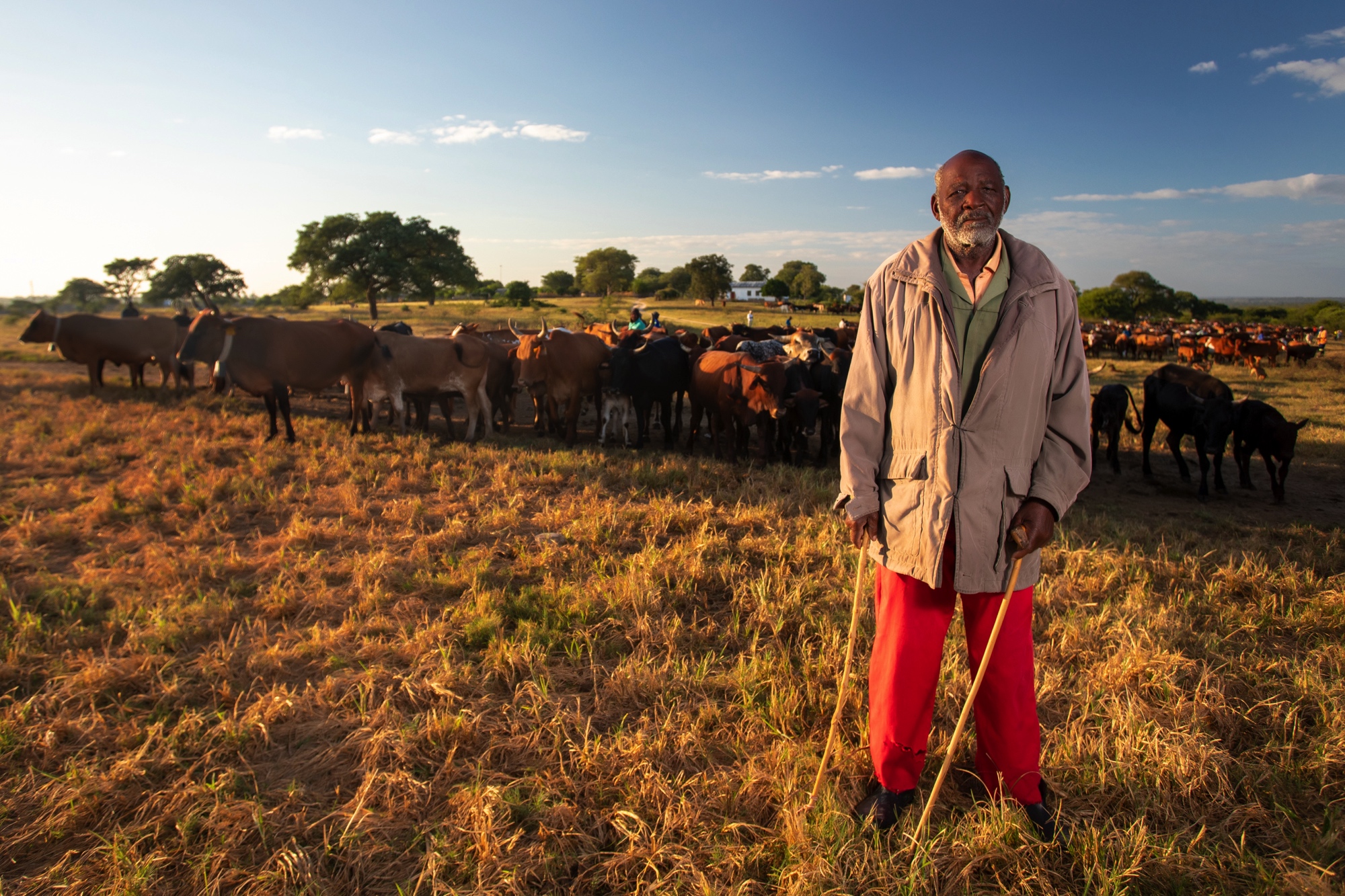
Herding for Health contributes to the UNCCD Rangeland Flagship Initiative at COP17
Herding for Health contributes to the UNCCD Rangeland Flagship Initiative at COP17, showcasing African-led rangeland restoration and resilience.

Livestock are threatened by predators – but old-fashioned shepherding may be an effective solution
Livestock are threatened by predators. Carnivores like leopards, lions and hyenas have been killing livestock for centuries, causing financial losses to farmers.
Our Challenge
Uncontrolled animal movement is one of the biggest challenges in communal rangelands. Livestock that is not kraaled and herded properly results in:
- Rangeland degradation
- Predation
- Disease transmission through contact with wildlife
- Poor herd health (high mortality and morbidity)
- Poor production
- Stock theft
- Tourism conflict
- Poor market and trade confidence
Our Opportunity
Regaining livestock movement control in communal rangelands through skills development, improved resources and incentives can lead to multiple positive effects.


